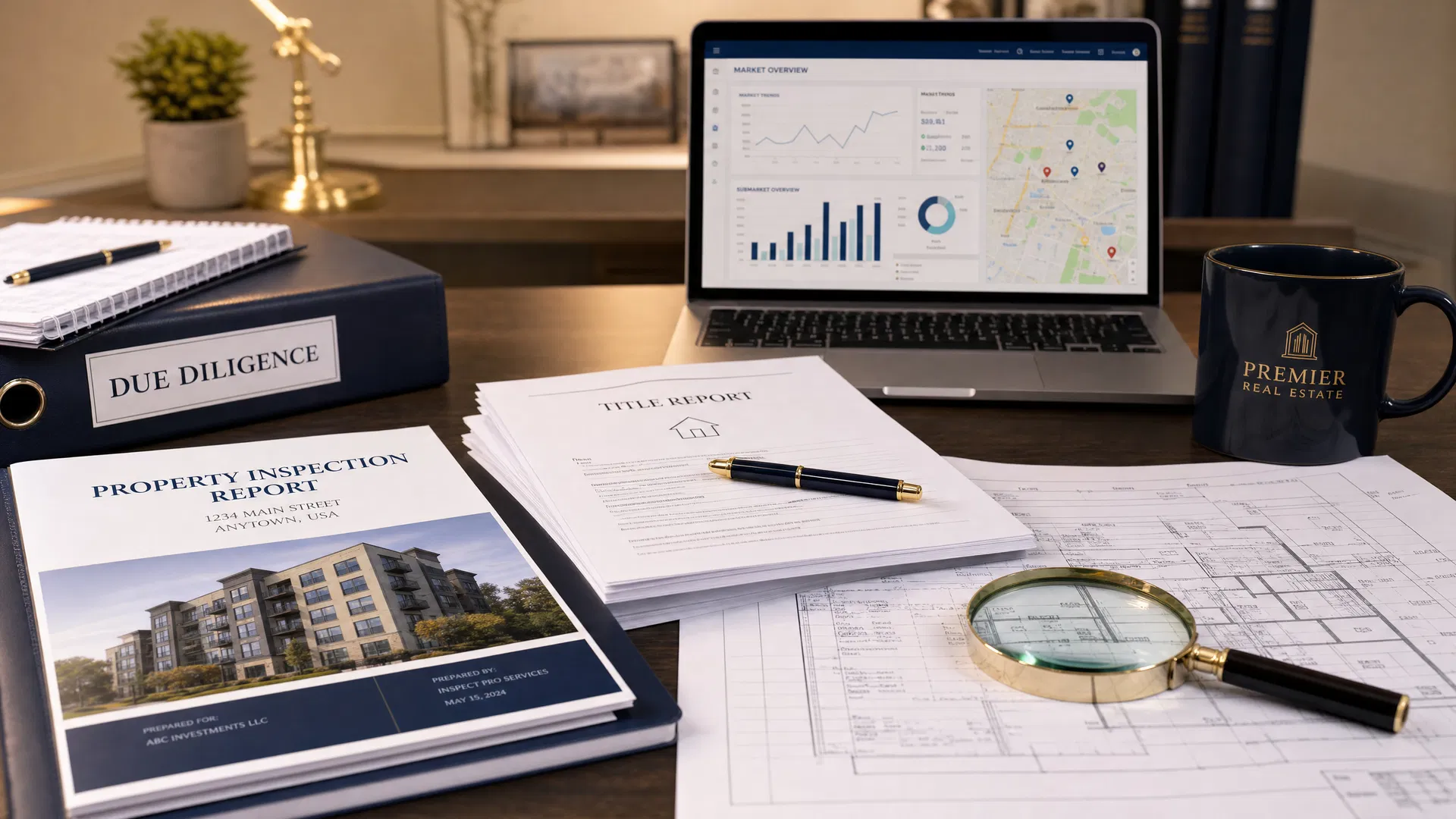
A structured approach to evaluating auction properties before you bid. This checklist covers title, physical condition, environmental, financial, and legal due diligence — the foundation of informed bidding.
Due diligence is the single most important step in the auction buying process. Because auction properties are typically sold in as-is condition with limited or no contingencies, the burden of investigation falls entirely on the buyer before the bidding begins. A thorough due diligence process protects your capital and ensures your bid reflects the true value and risk profile of the property.
This checklist provides a structured framework for evaluating auction properties. Not every item will apply to every property type, but the categories represent the core areas of investigation that informed buyers should address.
1. Title and Ownership Review
Title issues can be the most consequential risk in any real estate transaction. Before bidding, verify:
Preliminary title report: Review for liens, encumbrances, easements, and any clouds on titleChain of title: Confirm clear ownership history and authority to sellProperty tax status: Check for delinquent taxes, special assessments, or Mello-Roos districtsHOA or CC&R obligations: Review any homeowner association dues, rules, or pending assessmentsPending litigation: Search for any lawsuits involving the property or current owner2. Physical Condition Assessment
For properties where physical access is available:
Professional inspection: Engage a licensed inspector for structural, mechanical, electrical, plumbing, and roof assessmentPest and termite inspection: California-specific requirement; look for wood-destroying organisms and dry rotFoundation and seismic: Particularly important in California; assess foundation condition and seismic retrofit statusRoof condition and age: Estimate remaining useful life and replacement costMajor systems: Age and condition of HVAC, water heater, electrical panel, and plumbing3. Environmental and Hazard Review
Natural hazard disclosure: California requires disclosure of properties in flood zones, fire hazard areas, earthquake fault zones, and other natural hazard areasEnvironmental contamination: For commercial and industrial properties, review Phase I and Phase II environmental site assessmentsLead-based paint: Required disclosure for properties built before 1978Asbestos and mold: Assess potential presence in older buildingsWildfire risk: Increasingly important for properties in wildland-urban interface areas4. Financial Analysis (Income Properties)
For commercial or investment properties:
Rent roll review: Current tenants, lease terms, rental rates, and expiration datesOperating statements: At least 2-3 years of income and expense historyCapital expenditure history: Recent improvements and deferred maintenanceMarket rent analysis: Compare current rents to market rates for upside or risk assessmentVacancy and collection loss: Historical occupancy rates and any tenant credit concerns5. Zoning and Land Use
Current zoning designation: Confirm permitted uses align with your intended useEntitlements and permits: Review any existing development approvals or pending applicationsBuilding code compliance: Check for any outstanding code violations or required upgradesSetback and density requirements: Understand development constraints if considering improvementsHistoric designation: Some properties may have historic preservation restrictions6. Auction-Specific Considerations
Auction terms and conditions: Read every word of the auction agreement; understand the buyer's premium, deposit requirements, closing timeline, and default provisionsAs-is language: Understand exactly what you are waiving in terms of seller representations and warrantiesFinancing contingency: Most auctions do not allow financing contingencies; ensure your funding is confirmed before biddingClosing timeline: Auction closings are typically faster than traditional transactions (30-45 days); confirm your team can execute within the required timeframeBuilding Your Due Diligence Team
No buyer should attempt comprehensive due diligence alone. Assemble a team that includes a licensed real estate broker, real estate attorney, title company, property inspector, and — for income properties — a commercial real estate analyst or appraiser. The cost of professional due diligence is a fraction of the potential loss from an uninformed purchase.
Disclaimer: This checklist is for educational purposes only and is not exhaustive. Every property presents unique considerations. Buyers should engage qualified professionals to conduct property-specific due diligence before participating in any real estate auction.